Health? or Hype?
Make the right choice with recommendations you can trust, backed by expert testing.
Explore health recommendations
Hannah has three years of experience overseeing investigations around health, pet care and home improvements.

It has long been established that exercise during early adulthood can help to build stronger bones. But new evidence suggests that certain types of exercise in later life can have the same effect.
As we age, our bones tend to get thinner, and this can be exacerbated by changes during menopause.
This in turn can increase the risk of osteoporosis – a disease that causes fragile bones and an increased risk of fractures in later life. According to the Royal Osteoporosis Society, an estimated one in two women and one in five men over 50 will break a bone due to osteoporosis.
However, you can reduce your risk with some simple exercises that can help to protect and even improve your bone health, whatever your age.
We spoke to Professor Katherine Brooke-Wavell, professor in skeletal physiology, exercise and ageing at the University of Loughborough, and Dr. Friederike Schulte, co-founder at the Fall Prevention Centre Switzerland and group lead at the Laboratory for Bone Biomechanics at ETH Zurich, to find out more.

The type and amount of exercise you do can substantially impact the density of your bones.
Dr Schulte explains: ‘Your bones are constantly being remodelled in response to external and internal forces.’
Bones are exposed to two main types of force: ground impact force (for example your feet hitting the ground as you walk), and forces generated by muscle (for example your biceps contracting as you lift a weight).
These forces, or a lack thereof, cause your bones to become thicker or thinner.
‘For example, after months living in zero gravity, astronauts lose a significant amount of their bone density,’ says Dr. Schulte. ‘This is because they do not experience ground impact force.’
‘Conversely, tennis players show greater bone density in their racket arm compared to their non-racket arm, because they absorb and generate so much force through the arm they play with.’
When you exercise, you generate both ground impact force and force from your muscles, resulting in thicker bones.
Interestingly, research suggests that bones are able to respond to exercise due to mechanosensors – types of bone cells that 'translate' mechanical forces into chemical signals.
For example, some bone cells contain channels that are physically opened when force is applied to the bone (a mechanical signal), allowing calcium and other ions to flood into the cell (a chemical signal). This influx of ions both triggers bone growth and inhibits the cells that break down bone.
Exercise also indirectly supports bone health in multiple ways, including enhancing vitamin D absorption, which leads to greater calcium uptake, and stimulating the release of hormones that mimic oestrogen, which can help to suppress bone resorption.
The density of your bones changes a lot over your lifetime. To maintain good bone health, your body constantly breaks down old and damaged bone (called bone resorption) and rebuilds new bone.
Your bone size and density increases until your twenties, and then remains relatively stable throughout your early adult life. However, during our 50s and 60s, the density of our bones begins to decrease.
‘This is, to an extent, a normal part of ageing,’ says Professor Brooke-Wavell. ‘However, it can lead to osteoporosis.’
‘Osteoporosis is described as a "silent disease",’ adds Dr Schulte. ‘People often don’t realise their bones are thinning until they experience a fracture.’
Osteoporosis significantly increases your risk of fracture, with the most common injuries being breaks in the wrist, hip and spine.
The disease is particularly common if you're post-menopausal. This is because oestrogen slows the process of bone resorption. After menopause, oestrogen levels drop, and bones are broken down and absorbed more quickly.
Other risk factors for osteoporosis include having a family history of the disease; certain medications, including high doses of steroids; and having a low body mass index (BMI).
‘Osteoporosis can have a debilitating impact on people’s lives,’ says Dr Schulte. ‘Fortunately, evidence suggests that exercise can substantially reduce that impact.’
Exercise in your childhood, adolescence and early adulthood can have a long-term impact on your bone health.
A 2013 study found that adults aged 23 to 30 who were active as children had greater bone density than those with inactive childhoods.
Similarly, a 2014 study reported that retired athletes showed greater bone density years after retirement than non-athletes.
'This helps to prevent osteoporosis as you build a "buffer" of bone,' says Dr Schulte. 'You basically have more bone to lose before your risk of fracture is increased.'

The good news is that it's never too late to start, and it can have a real impact.
Research shows that exercise begun in later life can improve your bone density.
For a long time, researchers assumed that exercise could only slow the normal bone thinning that occurs with ageing.
For example, the Erlangen Fitness and Osteoporosis Prevention Study (2015) followed a group of almost a hundred postmenopausal women with thin bones for 22 years. All women in the study showed a loss of bone density, but women who exercised lost significantly less than those who didn't.
However, a growing body of evidence suggests that certain types of workout routines – specifically, more intense routines – may actually trigger bones to regrow.
The LIFTMOR trial (2017) studied a group of 101 postmenopausal women with low bone mass. Half followed a weekly exercise routine that included heavy weight lifting and high-intensity interval training, and half didn't exercise.
The study found that women who followed the exercise programme actually showed an increase in bone mass – their bones became stronger.
'Your bones thicken in response to force,' said Dr Schulte.
'When you lift heavy weights, your muscles contract strongly, which puts your bones under a lot of pressure. This type of exercise may actually cause bones to regrow, even later in life.'
Best exercise bikes – see which models we recommend for a satisfying workout

Evidence suggests that weightlifting and high-intensity exercise are the most effective ways to increase bone density.
Make the right choice with recommendations you can trust, backed by expert testing.
Explore health recommendationsYou don't need to do a huge amount of exercise: the LIFTMOR study found that lifting weights for half an hour twice a week was enough to see a difference.
You can introduce weightlifting into your routine by:
The crucial thing is to start slowly and ensure that you use proper form to avoid injury. A personal trainer can be helpful if this is an option for you.
If you already have osteoporosis, seek specialist advice to ensure you're doing exercise at an appropriate level for you to avoid injury.
Exercises involving jumping or lateral movements are also very beneficial for bone health.
‘Sports like tennis, badminton or dance involve more forceful steps and jumps,' said Prof Brooke-Wavell. 'This generates a lot of ground impact force, which will help stimulate bones to become stronger.
‘The variety of movements also strains the bones in lots of different directions, which will improve bone strength even further.
Again, this type of exercise may not be suitable if you already have osteoporosis; if this is the case you should seek advice from a health professional or physiotherapist.'
Best magnesium supplements – independent reviews you can trust from our expert nutritionist and dietitian

The risk of fractures as we age is determined by both bone density and your risk of falling, so increasing your stability and balance will also help to protect your bone health.
Prof Brooke-Wavell adds: ‘Improving balance decreases your risk of fall, thereby decreasing your risk of fracture.'
Exercises for balance and posture could include:
You might choose to integrate these into your workouts, for example by doing them after a walk or gym session, or you could do them throughout your day, for example when the kettle is boiling.
Make the right choice with recommendations you can trust, backed by expert testing.
Explore health recommendationsWhatever exercise you choose, both our bone health experts agreed that the most important thing is to stay active. 'The most effective exercise is the one that you do!' says Dr Schulte.
Although activities like running and walking are not as effective for bone density, they're brilliant for your overall health and will increase your balance and stability.
But it's worth assessing whether your current activities include a good mix of high-impact exercise, weight or resistance training and balance training. If there are gaps, even small adjustments can make a difference, such as adding short weight-training sessions at home.

Other lifestyle factors beyond exercise are, of course, also important for your bone health.
Some are general ones that affect many aspects of your health, such as cutting out smoking, drinking in moderation and eating a healthy diet.
Hormone Replacement Therapy (HRT) can also help to mitigate or prevent the risk of bone thinning during menopause, if it's an option for you.
Prof Brooke-Wavell and Dr Schulte emphasised the importance of three particular vitamins: calcium, vitamin D and vitamin K.
Calcium is a key building block for healthy bones, while vitamins D and K help this mineral to be absorbed (without adequate vitamin D, you can absorb only around 10% of the calcium you consume).
If you eat a restricted diet or avoid animal products, you may find that you don't get enough calcium from food, in which case you could benefit from a supplement.
However, supplementation should ideally be discussed with a medical professional, as excessive calcium intake – especially via supplements – has been linked to potential cardiovascular risks.
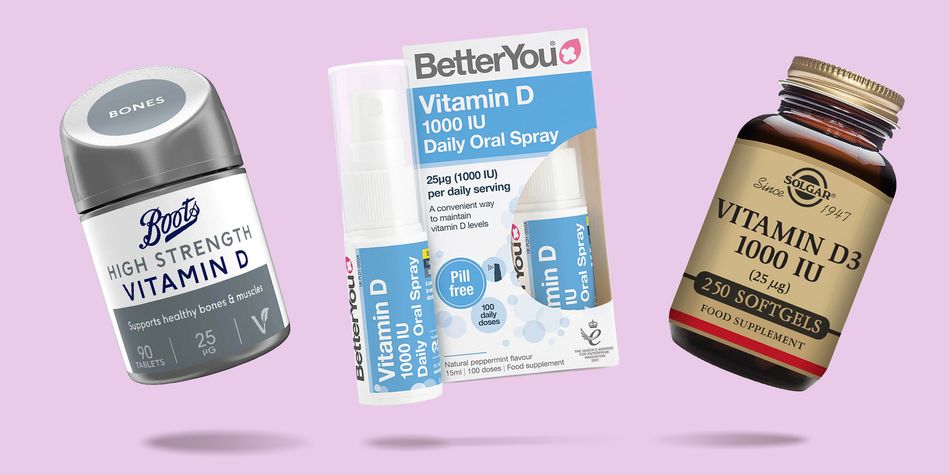
The NHS recommends that everyone in the UK supplements vitamin D in the winter – and that people with darker skin tones take it all year round. See our vitamin D supplement reviews for our nutritionist and dietitian-recommended picks.
Find out more about what actually helps us stay fit and healthy as we grow older in our podcast episode