By clicking a retailer link you consent to third-party cookies that track your onward journey. This enables W? to receive an affiliate commission if you make a purchase, which supports our mission to be the UK's consumer champion.
Is it normal to pay a reservation fee on a property?
Typically a cost found with new-builds, we explain when you should be cautious of the fee
Sam covers personal finance topics, from the best savings rates to the reasons mortgage lenders say no. He enjoys crunching the numbers to help consumers get ahead.
A reservation fee is a cost that many buyers may not expect when house hunting. If you aren’t buying a new-build property you’re unlikely to encounter one, but if you do, it’s worth understanding how it works.
Here, Which? explains what a reservation fee covers, why you might be asked to pay one and whether it’s ever appropriate for a second-hand home.
Be more money savvy
free newsletter
Get a firmer grip on your finances with the expert tips in our Money newsletter – it's free weekly.
This newsletter delivers free money-related content, along with other information about Which? Group products and services. Unsubscribe whenever you want. Your data will be processed in accordance with our privacy notice.
What is a reservation fee
A reservation fee is a payment that takes a property off the market. The money is usually returned to you or deducted from the purchase price when contracts are exchanged.
If the sale falls through, you’ll normally lose the fee, although this depends on the circumstances and the terms you agreed to.
The cost may be a fixed amount or a percentage of the sale price, typically ranging from a few hundred to a few thousand pounds. Even if the fee is eventually refunded, you still need the cash available upfront.
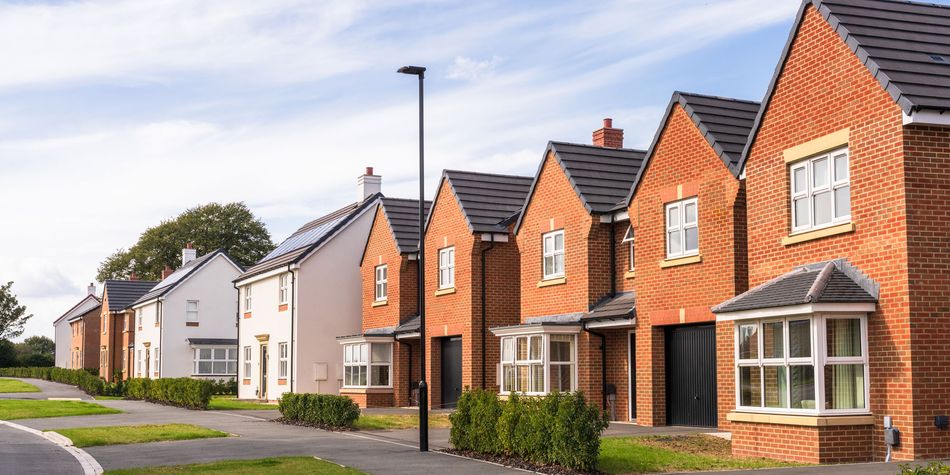
If you come across a reservation fee, it’s usually for a new-build home. Hamptons told us that this type of fee is 'common for new-builds'.
Barratt Homes says the fee typically ranges from £500 to £1,000 and is 'often deducted from the final price upon completion'. Hopkins Homes states that its fee is generally £1,000, with the property being taken off the market for 28 days.
The exact amount varies between developers and is usually listed on their websites.
Nathan Emerson, CEO of Propertymark, told Which?:
Traditionally such fees are more familiar on new-build properties in the form of a deposit, however with an ever more competitive marketplace such propositions have in some cases grown in popularity.
'It is however prudent to ensure all terms are fully understood when engaging in such a process and that you have full faith on how any such fees will be administered securely.'
In short, no. A local estate agent in East Anglia told us that such fees are rare and not something they would request when marketing a property.
Hamptons echoed this, telling us: 'We would advise against it as it can take a lot of time to-ing and fro-ing and complicates matters. This is something that consumers should consult with their solicitor.'
However, Which? became aware of a recent case where a reservation fee was requested on a second-hand home, which prompted us to look into how unusual this is.
From speaking to several agents, it’s clear that buyers should be extremely cautious if asked to pay a reservation fee on a second-hand home.
The exception is auction sales, where non-refundable reservation fees are standard. These cover listing and auctioneer charges and are usually a percentage of the final purchase price, although the percentage varies.
Ready to get a mortgage?
Find the right mortgage using the fee-free service provided by L&C Mortgages
If you click on the link and complete a mortgage with L&C Mortgages, L&C is paid a commission by the lender and will share part of this fee with Which? Ltd helping fund our not-for-profit mission. We do not allow this relationship to affect our editorial independence. Your home or property may be repossessed if you do not keep up repayments on your mortgage.
What’s happening in today’s market
Buyers remain in a relatively strong position, with more homes for sale than there are purchasers.
Asking price data from Rightmove and Zoopla shows a marginal month-on-month fall in average asking prices.
For sellers, getting the price right is more important than ever. Previous analysis has found that homes which reduce their asking price take significantly longer to sell. With Rightmove reporting that 34% of listings have already been reduced, choosing an agent who knows the local market is crucial.