Most state pensions could still be taxed next year despite the new exemption
From next April, pensioners with income only from the state pension will not have to pay income tax.

With a background in financial journalism across national titles, Ruby loves helping people take control of their money and specialises in pensions, tax, banking and benefits.

Matthew is an award-winning journalist, specialising in savings, tax and insurance.

Millions of pensioners are facing the prospect of paying tax on their state pension as rising payments push them above the tax-free personal allowance.
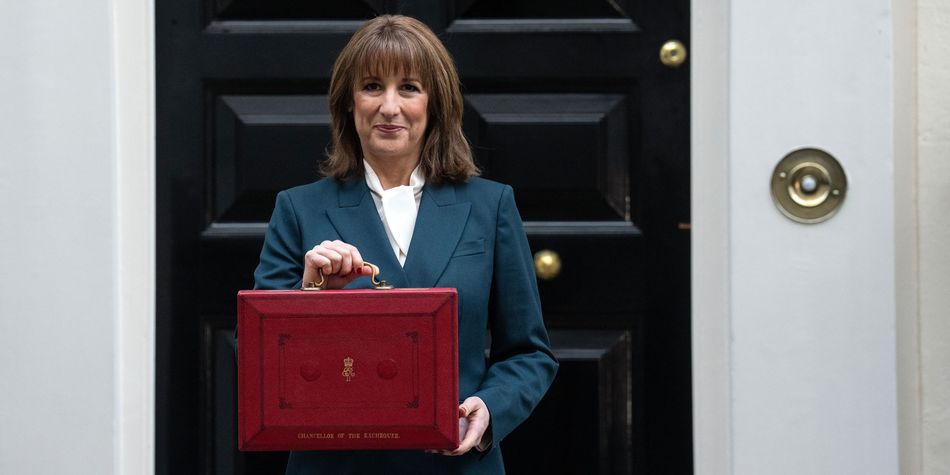
To protect those with little or no other income, the government has promised a new tax waiver from next April – with the Chancellor expected to set out exactly how it will work at the upcoming Budget.
Reaffirming this pledge, Pensions Minister Torsten Bell recently said: 'Pensioners who only just exceed the personal allowance will not have the administrative burden of paying small amounts of tax in this Parliament.'
But despite these reassurances, recent analysis by Lane Clark & Peacock (LCP) warns that the Treasury's current 'no increments' condition could leave millions of pensioners entirely excluded – meaning they will still face a tax bill on their payments.
Here, we break down what's going to change, who stands to lose out under the current rules, and three ways pensioners can lower their tax bills.
What's changing?
Announced as part of last year's Budget, state pensioners whose only income is the state pension will be exempt from income tax for the rest of this Parliament, starting April 2027.
Currently, the new full state pension sits at £12,547.60 – just under the £12,570 personal allowance. However, the Office for National Statistics (ONS) published recent wage growth figures showing that state pension payments could rise by up to £488 (3.9%) next April, taking claimants receiving the full amount comfortably over the personal allowance for the first time.
While Andy Burnham's government has confirmed this exemption remains in place, the Treasury has maintained a strict caveat: 'Pensioners whose only income is the full new or basic state pension without any increments will not pay income tax.'
It's important to note that this policy primarily covers those claiming the new state pension. Those on the old basic system currently receive £9,614 a year (potentially rising to £9,988.40), which remains well under the personal allowance threshold.
- Find out more: state pension age calculator
Who will be covered by the waiver?
The LCP report highlights three groups of pensioners who could be excluded from the tax waiver due to the 'no increments' rule:
- Those receiving top-ups to their state pension: The government has not yet set out exactly which additions will count as 'increments'. This could include protected payments under the new state pension and additional payments under the old system.
- Those who defer their pension: The waiver strictly excludes pensions with increments. This means if you delayed taking your state pension and your monthly payments increase – whether that is the current 5.8% bump or the older 10.4% rate - you might not be included.
- Those who live abroad: This group looks set to be excluded because they don't live in the UK.
The proposed rules could exclude large numbers of pensioners in two ways.
First, 6.5 million of the eight million people on the old state pension receive an ‘additional’ state pension on top of their basic pension. Under the current proposals, this would mean they don't qualify for the waiver.
This creates what former Pensions Minister Steve Webb calls a 'two-tier system' where old-system pensioners pay tax while new-system pensioners earning the exact same total amount pay none.
Alongside this, Webb warns that cashing out even a small auto-enrolled workplace pot could mean you are no longer considered 'solely dependent' on the state pension. This move could trigger unexpected tax bills – even if the extra income is just £1.
Webb argues that the proposals discriminate against those on the old state pension and create ‘cliff edges’ for people with even a pound of other income.
He says a general tax write-off for small amounts would be a simpler solution, alongside a more fundamental review of pension and tax allowance levels to address the issue in the longer term.
- Find out more: should you wait to claim your state pension?
How do pensioners pay tax?
Where tax is due and can't be collected automatically through PAYE, HMRC may send a Simple Assessment instead of asking you to complete a full tax return.
HMRC calculates the bill using information it already holds, including details supplied by banks and building societies. Information about your state pension is automatically provided to HMRC by the Department for Work and Pensions.
HMRC's website gives the following examples of when underpaid tax could trigger a simple assessment:
- Pensioners who receive income from state pensions, occupational pensions, employment pensions and most taxable state benefits.
- Pensioners with up to £10,000 of untaxed income (for example, from savings or investments).
Find out more: do you have to pay tax on the state pension?
What to do if you receive a tax bill
If you're expected to pay tax using a simple assessment, you will usually receive a letter between July and August after the end of the tax year. However, they can be sent at any time as information becomes available.
You’ll need to pay the bill by the deadline stated on the letter (usually 31 January or three months from the date of the letter).
Unexpected tax bills can be scary, especially if you're already struggling with your finances. Here are a few simple steps to take if you get a letter:
- Check all the information on the letter carefully, including personal details such as your address.
- Next, follow the instructions in the letter on how to pay your assessment. You can pay online, by using the HMRC app, via bank transfer or by cheque.
- If the information is incorrect or you have additional untaxed income, you’ll need to contact HMRC within 60 days.
Find out more: are you paying the right amount of tax on your state pension?
Get help if you need it
If you're finding any part of the process difficult or need to ask a question about simple assessments, you can call HMRC on 0300 200 3310. The tax office also has a handy online guide to help.
If you're struggling to pay, you can also set up a payment plan online. To be eligible, you'll need to owe between £32 and £50,000, not have any other payment plans or debts with HMRC, and plan to pay your debt off within the next 36 months.
3 ways pensioners can cut their tax bill
Whether you already pay income tax on your pension or are looking to pay less in future, there are ways to reduce your tax bill as a pensioner:
1. Access pension cash gradually
You can usually take up to 25% of the amount built up in any pension as a tax-free lump sum. The most you can take in total is £268,275.
However, this can also be accessed incrementally, with 25% of each withdrawal taken tax-free. This strategy can help to minimise the overall tax bill.
What you don’t take out can be left invested in your pension, where it can grow tax-free.
- Find out more: should I take a lump sum from my pension?
2. Make the most of your tax-free allowances
Those on low incomes can access a special ‘starter rate’ for savings, which allows you to earn interest up to £5,000 without paying tax. Every £1 of other income (for example, your pension) above your personal allowance reduces your starting rate for savings by £1.
Then there’s the personal savings allowance, which is worth £1,000 for basic-rate taxpayers and £500 for higher-rate taxpayers. Any interest you earn above that will be charged at your usual income tax rate (additional-rate taxpayers get taxed on all interest earned on savings outside an Isa).
- Find out more: tax on savings interest and investment income explained
3. Open an Isa
For those with larger savings pots, or additional-rate taxpayers, an Isa is a great way to shelter your savings interest or investment income from tax.
You can save up to £20,000 in an ISA, split however you want between cash and stocks and shares. Any income generated can grow completely tax-free, protecting your savings now and in the future.
The cash Isa allowance will drop to £12,000 from April 2027, but that won't affect savers over 65 years old.
- Find out more: best Isa rates 2025