Health? or Hype?
Make the right choice with recommendations you can trust, backed by expert testing.
Explore health recommendationsBy clicking a retailer link you consent to third-party cookies that track your onward journey. This enables W? to receive an affiliate commission if you make a purchase, which supports our mission to be the UK's consumer champion.

Having worked at the BBC and in commercial radio before joining Which?, James produces our always-on podcasts, and oversaw the launch of our member-exclusive podcasts in 2025.

Exercising is one of the first things that comes to mind when you think about living a healthy lifestyle. But what should you be doing? And how often should you be doing it?
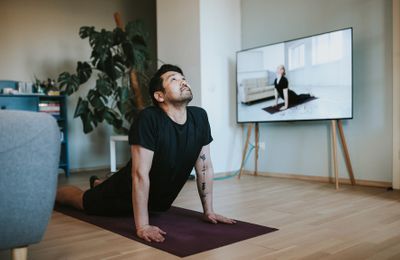
In this episode of our special healthy living series (first published 9 June 2025) we sit down with legendary fitness coach Mr Motivator to find out how we should be approaching exercise at different stages of life.
Plus, we share our advice on shopping for the right fitness tracker to help keep on top of your daily activity.
Lucia Ariano: Exercising is one of the first things that comes to mind when you think about a healthy lifestyle. But what should you be doing and how often should you be doing it? Welcome to this podcast from Which?.
In today’s show, we’ll be deep-diving into fitness with a legend that needs no introduction.
Mr Motivator: Don’t forget the man, the myth.
Lucia Ariano: The man, the myth and the legend that needs no introduction. He’s the powerhouse behind getting the nation moving on breakfast TV since the 90s, I believe?
Mr Motivator: Pretty good.
Lucia Ariano: Mr Motivator himself. Now, we’ll be talking about the kinds of exercise you should be doing, how that changes as you age and I’m sure plenty more expert advice and recommendations to help you live your best life every day. Later in the show, we’ll be hearing from the Which? fitness trackers expert to help you navigate how to find the right model for you.
But first, I’m joined by none other than Mr Motivator, also known as Derek Evans.
Mr Motivator: Hello. Don’t forget the MBE. Derek Evans MBE. Motivated By Exercise or MBE from the William. I love that.
Lucia Ariano: What should we call you today?
Mr Motivator: Whatever is your comfortable with. If you know me personally, Derek. If you don’t, you just call me sir.
Lucia Ariano: Right then, sir. So, well thank you so much for coming in today. My partner was very excited when I told him that I was interviewing you today. Where shall we start? I’m sure our listeners will have seen you in action. For anyone that hasn’t, how would you introduce yourself?
Mr Motivator: I see myself as a 12-year-old who never grew up. So, I’m in bright colours, jumping around an Energizer bunny – always have a lot of energy, a lot of colour, a lot of great music, wonderful attitude and this is me speaking highly of myself. A very low ego.
Lucia Ariano: Well, that's what we like to hear.
Mr Motivator: But really having a good time of life and in fact, I want to share that with people, not only in terms of words but in terms of movement and everything else because movement is medicine.
Lucia Ariano: Well, this is the first time I've met you and I have to say you're exactly how I thought you'd be – from the iconic outfits, the brightness, the liveliness, just like the bright personality. So, I’m sure our listeners will remember you and still know you as somebody who’s woken them up in the morning and how would you say over the years it’s changed? Are we still – are we more or less active now?
Mr Motivator: Things have changed a lot. Not for the better, I might add. I think the first thing is if we just look at health clubs. I think it’s a crime that health clubs see you, make the effort of getting out of your sofa, coming in through the doors, they take your money and then they give you a key to let yourself in. There’s no aftercare. There’s no one calling you up and saying, "We haven't seen you in days." But the moment you stop your membership, all of a sudden, they’re calling up saying, "Why aren't you coming along?" When they, if what they did all along was to create a social atmosphere to make people feel wanted, because lots of people are on their own. So, if the gym could become the new meeting place for people, where you could sit and have a cup of tea after exercising and movement. That’s the first thing and so that’s a real change because at one time leisure clubs were really very popular and now they’ve become a fitness club which are really impersonal.
Number two, I think what's happened is that we’ve created a lot of new exercise regimes, which is only really a reforming or reshaping of things that we used to do in the past. So, circuit training, all those things have now become the HIIT, become all these P90X and stuff like that. But it’s the old circuits, the old interval training renamed. What has that done to the marketplace? All it’s done is given the regular exerciser more choice.
But in terms of empowering people to get out of the sofa to come into gyms, that's not working and that's not really getting them going. That's why there's power behind the Couch to 5K because it gives you a goal, it gives you a starting point and you will per se see the results if you stick with it. I think that's where I come in because I recognise that people are strapped for cash, they don't have money for memberships and stuff like that, can't download an app. So, let me give them a free platform they can join me for free classes online, totally free, all the content and it's not just about classes. It's about mentally trying to get you fitter and healthier and we mustn't forget that.
Lucia Ariano: And actually, I know a lot of people who have done that. So, it must be working or at least it’s definitely getting to people.
Mr Motivator: Yes, it’s getting to people who are sitting around at home thinking, "I must." I think if you give people maybe just five minutes of movement and the right information, that is a starting point for a lot of people. What tends to happen is that people get injured in a gym, they get injured when they’re exercising on their own where they haven't got the right advice and that puts them off. So, my aim is to make sure that whatever they’re doing is done safely and in doing so safely, they then will continue without getting injured.
Lucia Ariano: Shall we start talking then about the kinds of stuff we should be doing and how often? Where would you want to start here?
Mr Motivator: Well, we talk about getting older and everyone of us must go through that wonderful circle of life. Now, whatever you do now is the foundation stone for how you're going to be for later on. Now, I work a lot with older people. I do some cruises where we have some huge classes – on the biggest room on the ship, we’ll have 200, 250 people, 70 years of age and older. When you give them the confidence to be able to stand up straight, to work on their balance, their flexibility, their movement, to get the old fast-twitch muscle fibres going again, all of a sudden, you get tremendous results from them and they then feel confident. So, you reduce the likelihood of falling.
As we get older, there are numbers of things that we should be putting in place. Weight training plays a major part as we're getting older because muscles need tightening up, they need to be used. If you don't use it, as they say, you lose it and the common thing is if you hold your hand up in the air and wave to anybody, once you've stopped waving, underneath your arm is still shaking and that's because we've neglected it over the years. So, I think it's important that we understand that as we get older we should definitely be doing weight training, flexibility training, mental training, balance work – and all those things come into play – and it starts now, no matter what your age.
Lucia Ariano: And what does that – can we talk a little bit more about some of those you’ve just mentioned? What do they look like?
Mr Motivator: Well, one of the best exercises for everyone to do – and if everybody did this three, four, five times a day, only for a minute each time, guess what, they’re going to increase the strength in the areas of their body that they need for stability going up and down the stairs – and that is literally getting up from the chair and sitting back down. Because that is a squat and a squat uses so many muscles and if you just start with the very basic of getting out of the chair – number one, that's going to help you with your independence as you get older because lots of people have difficulty getting out of a chair, not necessarily the older people, people in general have difficulty getting out of any chair that's low – whereas if you get up, sit down, get up, sit down and you only do it 12 times every hour, by the end of a 10-hour period, you've done 120 squats. That means your muscles in your legs are working, your balance is working and that is a great thing for your future stability.
Lucia Ariano: I love that idea. But as you were saying that, do you know what I was thinking of? That advice where if you're in front of a screen all day to look away every 15 minutes or every half an hour. To add "do 12 squats an hour," I think is brilliant. But it's quite a big stretch from "just look away from your screen," which we're not even doing, to then doing squats.
Mr Motivator: Honestly, to be honest, we give some crazy advice to people which people are never going to follow. We tell people, "When you go shopping, park away from the entrance." No one ever does – even the fittest person never does. They go for a spot which is right by the entrance. We tell people, "Carry your shopping equally balanced in both hands." You don't, you put it in the trolley and you push it out to your car.
What we've got to do is make people understand that there are little targets that you can set yourself throughout the day. And that is every hour set your alarm, your Fitbit or whatever it is, to alarm. And that hour, when it alarms, you say to yourself, "Okay, what am I going to do for a minute? Just a minute." Now, that is far more achievable than saying to people, "Look away from the screen." You naturally do look away from the screen, but that is not exercise. I’m sorry. All day, you're moving your head, if you comb your hair, you're moving your neck, if you lift your shoulders up to put your clothes on, you're moving your neck. That’s not exercise. It's movement, but it's not exercise. We need to get people thinking, "Okay, how can I just do one minute and improve my lifestyle?" And one minute every hour will improve your life no end.
Our problem is we have an NHS which is struggling to cope with the amount of people who've got conditions that could be minimised, if not eradicated, by movement. And that's why my phrase is "movement is medicine," and it is. So, I’d say, look, think about the way you're sitting when you're watching television.
Lucia Ariano: You are making me think I’m slouching, actually. I’m going to sit up straight.
Mr Motivator: If we all sit forward of the chair, you will automatically sit more upright. If you imagine there's an orange between your shoulder blades when you're sitting up and you're squeezing the juice of the orange. You're doing it. And as you squeeze that juice of the orange, you can feel the juice running down your back. Again, you've changed your posture. You've changed your view on life. You're now looking much further ahead, rather than looking down at the floor. When you sit, make sure the soles of your feet are on the floor. Don’t always cross your legs, because when you do and cross your legs –
Lucia Ariano: I’m changing as you’re speaking.
Mr Motivator: The weight of your top leg is pushing down so all the veins are getting restricted. Before you know it, you've got varicose veins. So, soles of the feet on the floor, sit upright and if you just every hour when the Fitbit alarms remind yourself to do that. Don’t sit right back in the chair because you're likely to slouch, sit forward of the chair and you sit upright. It feels good. And your breathing changes because now you've opened up the chest. Oh my good, Lucia, I feel so good.
Lucia Ariano: Well, that's true, isn't it? Because when you exercise you do feel good.
Mr Motivator: You know what, I say to everybody, we all go out for a meal, don't we? And we go, "That restaurant food was great." And we tell our friends how wonderful the food was. And we say to them, "Boy, that food was great." How do they know it's great? The only way they’re going to know it's great is to go to that restaurant and try it.
Essentially, what I do with exercise is say, listen, it's fabulous. If I’m stressed – and I’ve been at different levels of stress and when you lose someone in your life, that is major stress. They say moving house is stressful, getting married is stressful – not as stressful as losing someone who's really close to you. And if you lose someone like a granddaughter who's only 12 years of age, that is major stress.
Now, how did I cope with that stress level? I coped with it in two ways. One was to go and exercise. And automatically, it’s like a cloud lifted and I could see through the cloud and I could see light shining through and I felt good and I could work towards that light. That's the first thing. The second thing I did was I actually started said to myself, "Let me look at the values I have in my life. Let me look at all the things that make me blessed." And in particular an older person, you've got a history of so many things that make you blessed and if you've got to a nice ripe old age, stand up for a moment, just look in that mirror and be proud of who you are and tell yourself you're fabulous.
And if you start putting these positive affirmations in place, what does that do to you? It makes you feel good, it makes you want to get up the next day, it makes you cope with the stresses of life, Lucia. And also, if you're close to the edge, I say to you this – every autumn, those trees out there lose their leaves. And you look at the colours of the leaves coming down, it's beautiful. Those trees stand up tall, don't they? Because they know that in the spring, guess what, they’re going to flower again. And so for us, when you're going through those stresses in life, if you exercise, move your body, have a positive outlook and think about those leaves on the trees and the way it stands up, it gives you a focus. It brings you back from the edge. It makes you think it's all worth carrying on, isn't it? Oh, we've gone deep, Lucia.
Lucia Ariano: Do you know, I always go deep. That's what I – if you find me at a party, I’m in the corner having deep conversations. There's so much I want to talk about from that. Positive affirmations – I mean, that's something I find myself doing all the time. "Lucia, you're doing a great job," just trying to think that every day. And that’s so linked to exercise as well. I did a marathon – just one marathon, I don’t think I’ll ever do one again – but I just did it and actually it got me out of – I kind of went from 5Ks to a marathon off the back of some anxiousness. I just started running. And having a mantra really helped because it's so linked, isn't it? The mental and the –
Mr Motivator: Oh, absolutely right. And you know, we can learn so much from, for example, disabled athletes. I mean, you think what they go through and that's why I maintain sometimes that we as able-bodied are more disabled than the disabled person. Because I see someone and I work with a lot of people who have maybe only movement upper body, maybe they’re tetraplegic, very little movement, but yet they can achieve so much and that tells you how powerful our mind is. That if you've got that in place, you're on your way and you talk to any marathon runner, you talk to someone who's a sprinter – if their mind is not on song that particular day, their performance is totally jeopardised, they’re not going to do well.
And so, what do we need to do to actually get ourselves mentally fit? We need to practice being positive. We need to stop using words like "maybe," "I’m going to try," "I can do it," "I’m great," "I’m fabulous," "I’m terrific," "I feel good," rather – if you ask someone how are they, I guarantee they’re going to say, "Yeah, I’m alright." "Yeah, I’m alright" is nothing. If you ask me how am I, I’m going to tell you, "Hey, I’m feeling really great. I’m fabulous." Even if I don't feel it, because we do gravitate to our dominant thought. So, if you're saying to self, "I do feel great," guess what, that's how you're going to start feeling. And you will transmit that to everybody you meet. You walk into the office, your shoulders will be back, you walk into the room, you're taking control of the room. Whereas if you go in with your shoulders down looking down at the floor, everybody knows who you are and where you are and where you're feeling and they’re never interested. Whereas if you come in with your chest is up and a smile on your face, they go, "What did you have last night? I want some of what you were having." See how infectious that is.
Lucia Ariano: And I just keep thinking about the orange between the shoulder blades every time you're saying stand up right. Absolutely. Can we go back to something you said earlier about movement as medicine? Maybe if you could give us or start giving us some examples of the types of movement, particular ones that stand out as being like medicine?
Mr Motivator: I work with a lot of people who are older than 70 on these cruise ships. I do about seven cruises a year for this company and our classes are packed with over 70s. Most of them feel neglected because they go along to the physio, they get given a piece of paper of exercises and by the time they've got home, they've forgotten how to do it. No one cares about them. We have seen what happened in lockdown how, in fact, people were neglected at the older age group. For them, they need reassurance that they could be alright, that they could stand up and not fall over.
So, there’s lots of things that I talk to them about – I talk to them about how you stand, you know, legs slightly apart, make sure your weight is in the middle, always focusing on, don’t stand on one hip, which could be a cast back to when they had children, they always carried the child on the hip, so the spine is out of line.
We do lots of quick movement. Quick movement is really important for the older person because those quick movements train the muscle fibres, the fast-twitch, to ensure that if they have to react quickly, if they’re falling, they can react quickly – legs go into place, hands move into place.
We do a lot of things to do with cognitive skills, which is a lot of coordination – you know, you punch forward left hand, right hand you punch forward so it’s single-single and then both together – a lot of that kind of work, which again is training the mind to actually be able to react and get the cognitive skills going.
But one of the most important things to say to people when you walk, so you don't stub your toe, think heel-toe. If you think heel-toe every time you walk you're rolling from the heel to the toe as you walk, again, you're in a wonderful position to ensure that you reduce the likelihood of falling.
Now, to younger people, those messages don't mean a thing. They’re not interested because as far as they’re concerned, they’re invincible. But as each decade goes by, our body changes. And I know that I had aches and pains in my 40s, 50s, 60s, that I’d go, "Oh, it's because I did that weight training last night," or "It's because I did that class." Now, when I get up every morning, it's fatal. I think to myself I’ve got to call the doctor because you get so many aches and pains.
And so, flexibility, mobility is really important. And the more you do the better it is. So, I’m involved with some people, for example, who we are promoting they’re called Fit Classes and these classes are aimed at increasing the balance of older people. To ensure that you work out how to go down on the floor and get up from the floor. You know, most older people won't go on the floor because they’re afraid they’ll never get up. There are people, 40% of people who fall and break a hip within that first year could possibly die. Frightening stats. And yet still we know movement is medicine, so we have to get movement into those people.
And it's real simple stuff. Get some good music, some attitude, roll the shoulders, shoulders up to the ears and down, give me some marching on the spot, give me some knees coming up, push the hands up in the air, do some big circles and one thing that can keep you exercising if you want to make it real fun is to with each leg, lift it up and use your toes to write your name. And the action of writing your name with your toes as your legs are lifted up is using the muscles in a different way to the way in which normally do it. Use your hands to actually spell out numbers, do two back to back, do threes back to back and so it goes on.
Lucia Ariano: It’s a kind of physio, isn't it? I mean, that's the kind of thing you'd be – I mean, I’m doing it. I don’t know why our listeners can’t hear, I’m actually just moving my shoulder around.
Mr Motivator: Sure. Yeah, but you see what I’m doing is deflecting. So, if you've got a frozen shoulder, the first thing is you know where the pain will hit you. But either side of that pain is a place that you can move. And if you move either side of that pain, the area that's got pain will reduce and get less and less until eventually it disappears. So, what do we need to do? Deflect your way from the pain. So, if I want you to exercise your shoulders, I’d say to you put your hands on your shoulders. Now think of your elbow giving me an O. Think an O.
Lucia Ariano: I’ll do it.
Mr Motivator: Can you do the O? Now, reverse the O. All of a sudden, you're exercising the shoulders within the threshold of safety. The same thing with anything to do with your legs. If your knees are causing you problems, and that happens to everybody, there's an area either side of pain that you can exercise. And what you do is you just work within that area of pain and by doing it, what you're going to do is you're going to flush out the swelling, flush out the aches and pains that's there until eventually that disappears and it goes.
Lucia Ariano: What I really like about how you've just described that is how accessible it is. Because the reason why I mentioned shoulder is because my dad has had a dodgy shoulder and I would try and get him to do his exercises but he just wouldn't. I mean, he had quite an active lifestyle through work as an electrician, but apart from that hasn't really ever exercised. He’s one of those people.
Mr Motivator: And what I would do with him now, you see, is this. Okay, if he's got a shoulder that's frozen, achy or whatever it is, how about trying to get him to put on a jumper? At the moment, he can't put on a jumper because the shoulder. So, if we get him a zip-up cardigan and get him to put his hands in his zip-up cardigan, what's he doing? He's moving the shoulder and then from there he can progress to let's try and get it into a jumper, a cardigan.
So, everyday life and things that we have to do every day is movement. Because remember this – the moment you turn over in bed to think about getting up, that's where movement starts. And when you turn round onto the side of the bed before you get out of bed, the next movement happens. You stand up, so you've used the quads. You go to the bathroom. When you sit, squat to do your business, again, you've used those muscles. When you brush your teeth, the action of brushing your teeth is movement and so it goes on. So, everything we do during the course of the day is movement. I just feel that we need to do more of it to get the benefits. And so, therefore, you just got to be – you got to think, "What can I do?" Okay, what I can – I can march on the spot, I can sit in the chair and I can run, I can do stride jumps from a chair, I can do spotty dogs, I can do high kneeling.
Lucia Ariano: What’s a spotty dog?
Mr Motivator: Spotty dogs is where the legs interchange, so the right leg goes forward, put the heel on the floor and then change it round. So, yeah.
Lucia Ariano: Okay, yeah. My feet are moving under the table.
Mr Motivator: And then of course that contracts your stomach muscles. And a stride jumps, lifting both legs up. You can skip both legs. Remember, if every single person jumped up and down 30, 40 times, their bone density would increase because you're using your body weight shocking the bones and that's going to make them strong. So, there's lots of practical things we can do. It's just that we got to be imaginative and don't just sit there and vegetate.
And if you're retiring, remember, if you retire, don't wait to expire. And I see that going on too many times where people have gone, "Okay, I've retired. What am I going to do now?" You're joking. You're in the best years of your life now. It's your turn. The kids, you've fed them, watered them, educated them, clothed them, you've kicked them out. It's your turn now. So, now's the time that you what you do is you spend the kids' inheritance now – S-K-I-N – spend the kids' inheritance now and look after you. Because you're the most important person now. And because remember, as a woman, for example, and you have children, you've taken on this new role. You've gone through looking after them and mothering them. No matter how much you try to get fitter and healthier when you've got children, it's the toughest job in the world. Because every time you go into a gym or wherever to exercise, you are still listening out for that child. If you go to the bathroom, you're listening out for that child. So, you haven't freed your mind at all. But there comes a point where the devils leave and they only come round occasionally with their shopping bags to empty your larder. All the period in between is your turn, is when you look after you.
Lucia Ariano: And so, I mean, would you say then people are getting better at listening to this motivation and being –
Mr Motivator: No, they’re not, Lucia. No, they’re not. You know, we have serious obesity problems in this country and obesity should be classified as a medical condition because there's lots of people who, medically, no fault of their own, have that to deal with. But the majority of us have a choice. We have diabetes level which is through the roof. What we have is government who goes, "Okay, let’s penalise companies and make them reduce the amount of sugar and stuff." But if you reduce the amount of sugar, people are likely to just have more of the thing anyhow. Reduce the size of bottles, people buy a lot more bottles.
What we need to do is to empower people to look after themselves. That's the focus. And also, we need to stop saying, "Here's a drug that everybody should take." That drug is specific to people with a condition they've got to deal with. So, therefore, what we should be doing is, okay, how can we encourage people to get more active? Don’t give them incentives that say, "Here's some tickets to the theatre if you do well." No, no, no. Don’t, "Here's some tickets to go and have a meal." No, that's not it. I believe that what we should be doing is giving them incentives, so maybe they get money off things that are healthy. So, you're encouraging them.
But also, I think what we need is we need a czar of fitness. I could be applying for that job. A czar of fitness so that we try and inspire people and make them understand the difference between school and life is this – a school, you're taught a lesson and given a test, but life has a way in which it tests you which teaches you a lesson. And we all know the lesson of neglect. We all know it. We see it. We see it around us. We see people walking along where they’re shuffling. We see people who are falling. By the way, if someone falls in front of you, do not rush to help them. That's the worst thing you can do – you create more damage. If someone falls, sit by them, reassure them, ask them to check themselves, make sure nothing is broken, make sure nothing is aching and then if they’re okay, then they get up. If they’re not okay, leave them where they are. That's important. That's another talk we do on falls what people should do.
So, I’m saying to you that we need to empower people to make them understand that if you take control of your life, your health, your fitness and look after it and don't rely on government to put policies in place, then you're on the right road. And also, you're setting an example to your children and your grandchildren. Every one of us wants to be around to play with our grandkids. So, therefore start now looking after yourself.
Lucia Ariano: So many pearls of wisdom in today's show. Let's go back to falls first, shall we? This might be a worry that some people have or they’re just thinking how can I prevent this. What advice would you give?
Mr Motivator: One of the best ways of preventing falls is to get as active as you can so that way you can react when you're going to fall. All too often because the muscles have withered away, your balance is off, so you're going to fall and when you fall, you can't react quickly enough to grab something or to put a leg in place. So, we're doing lots and lots of classes where we teach people across the country – in fact, we're working with physiotherapists teaching physiotherapists how it's a one-day course where they learn how to set up their own classes where people come to them once a week to learn the very basics.
But there’re certain things that people should do in their home right now. The first thing is to do, if you've got stairs, is downstairs, put a blanket, put a pillow, maybe a bottle of water underneath the settee. And the reason for that being there is if you were to fall downstairs, you're going to crawl to where that is and cover yourself to keep warm. Because often you could be in a state of shock and we want to keep you warm, keep you hydrated. Everybody should have either a phone or they should have a friend where they have an arrangement with is every other day you call me, Joan, and I’ll call you on the days in between and we make a fact of calling each other at 3 o'clock or whatever it is to check if we're okay. Because as I was recently doing a talk where in fact a lady had been on the floor for three days. Three days.
So, we've got to encourage people, especially couples getting on in years, to start developing outside interests – little groups that they go to, a dance group, a swimming group, a walking group, a bridge group, a coffee group – so you've got the support group because as the circle of life dictates, one of you will go. And you need to put in place the preparation, it's a bit like saying, "I must do my will early enough. I must do my funeral arrangements early enough," even though you're only 21. And being prepared is being forearmed. So, therefore, by setting up this outside group, you've then got a support group.
Because when you fall, the chances are if you have not been active, you are going to break something. And if you fall, don't jump up straight away. People get embarrassed and they go, "Oh, let me get up." No, don't, you lay there. You go, "Okay, let me move my head. Is my head okay? Did I bang my head?" Because often people don't remember what the last thing was they did. "Is my head okay? It's fine. Let me go to my neck." I can turn my head side to side, my neck's fine. "Shoulders?" I can lift my shoulders up. "Oh, oh, my right arm, I can feel something is not right with my right arm. Oh, when I go down to my legs, my right thigh something wrong. So, I’ve obviously damaged that. I’m not going to move. I’m not going to move, I’m going to call for help." Those are important things to – you stop, you check yourself, you just make sure that if there's no pain then you can start working your way to getting onto a settee and that's often difficult for people to get up there. So, you've got to be able to get on all fours and we provide all that within my club that we have, show you exactly how to get off the floor if you've fallen and you haven't damaged anything.
But the most important thing is if you fall, do not jump up, don't get embarrassed because you're feeling embarrassed, you think everyone's looking at you. Don't forget those same people one day will fall as well. So, stay there, check yourself and then you can decide what to do. Remain calm, breathe slowly, deep breaths, lower your whole tone, your feeling of panic because you're now replaying every image of everybody you know who's fallen and every older person knows of someone who's fallen. So, deep breaths, slow your body down. "Okay, now I’m okay, let me just check. Okay, my legs feel fine. My hip – oh, my hip doesn't feel right. I better not move it."
Lucia Ariano: Very important advice there. I also felt like I was in a kind of meditation.
Mr Motivator: My voice took you there.
Lucia Ariano: It did feel a little bit like that. Just while we've you mentioned your clubs there, I think just while we're kind of here, where could anybody find more about you and what you're doing?
Mr Motivator: Just put in mrmotivator.com. It'll take in Google, it'll take you to the website and all you do is join the club. We don't take the only thing we ask you to do is to put your own username and your own password. That's it, we don't take credit cards, don't take addresses, we don't take any personal information. You're automatically in the club and if you want to find out when my live classes are, you look up live events, go to the date you're interested in and it'll tell you what classes are in. It'll give you a description of what the classes are in if it's too tough. So, for example, 6:30 in the morning we tend to go crazy and it's mad. But generally the classes are no longer than 30 minutes. If I’m not doing live classes, you'll get recorded classes and you can choose a 10-minute, maybe just bums, legs and tums, a five-minute of stretching. We've got people doing yoga, pilates, tai chi – I even do bedtime stories on there.
Lucia Ariano: There we go, see. I actually do need those because sometimes I’m trying to find them on Spotify and I’ve just not finding what I need. So, there we go. I’m going to. I mean, we do have to wrap up and we've covered so much ground, so much advice.
Mr Motivator: We'll have to do it again.
Lucia Ariano: Yes. But until that point, anything you'd like to say again or anything we haven't covered that you'd just like to mention?
Mr Motivator: I think it's great when we spend time trying to look after ourselves. But one of the greatest satisfaction I’ve had in my life is to do things which benefit me and also benefit other people. And so, I get often get asked what motivates me and keeps me going. It’s when people write in and go, "You know, because of you last September, I was five and a half stone lighter and here I am, I’ve lost weight." I don't size-bash anybody. As far as I’m concerned, if you're happy in your skin, fine. So, if you're happy being 18 stone, fine. But why not aim for another level of fitness? Nothing to do with weight loss or nothing to do with your size. Why not make yourself a fit 18 stone? And you can be. Because there's some guys out there that's how they are.
The most important thing is that we've got to love ourselves. And if you love what you see in the mirror, great. If you want to make a change, I can help you. I can help you either by giving you the environment that motivates you to go on to being that better version of yourself. And so, that's why I believe I’m here, I believe that's why I was recognised with an MBE because the health of the nation is really important to me and I believe if we all took charge of it, we'd be setting an example not only to our kids, our grandkids, but to our work colleagues. And the greatest gift that you can give yourself and all your work colleagues, your friends, is an independent healthier you. And that's what I’m trying to get people to do is to work towards being independent as you get older, so that way you can wash the bits that need washing, wipe the bits that need wiping yourself and never needing anybody to help you unless you've got a medical condition. And that's my aim and hopefully people will recognise me for that and I wish everyone well, no matter what your journey is.
Lucia Ariano: So many pearls of wisdom in today's show. Well, thank you so much for coming on the show today.
Mr Motivator: My pleasure.
Lucia Ariano: Now, we're here to talk about fitness trackers and I’ve got with me our Which? very own Amy Axworthy. Hello, Amy.
Amy Axworthy: Hi. Thank you for having me.
Lucia Ariano: Well, thank you so much for joining us. You're the fitness trackers expert at Which? and we've just talked about all things exercise, body and mental health. Where do fitness trackers come in?
Amy Axworthy: So, fitness trackers can be a really useful tool for you to understand a bit more about your overall health and wellness because they can track health measurements like your heart rate. It can give you a good overall impression of what your heart rate is doing, you know, at different times of the day. And there are also softer metrics that they can track like sleep tracking and stress tracking. And that just helps you to understand a little bit more about how your body is reacting at different times of the day and to different times of rest and exercise.
Lucia Ariano: Stress tracking. I wonder how does it do that?
Amy Axworthy: Stress tracking is one of the softer metrics and by that I mean it's an estimate of what your stress levels might be throughout the day. Different devices use different metrics to measure that and a lot of clever software in the background to try and give you an overall impression of maybe when you're a bit stressed in the day. So, if your heart rate is particularly high, it might tell you that it thinks that you're more stressed than normal and yeah, that can be really helpful for some people who maybe are wondering why they’re not feeling so great at any particular time.
Lucia Ariano: I feel like I could probably do with that to tell me to go and have a cup of tea now. Okay, so fitness trackers, smartwatches – are they the same thing? How do they differ?
Amy Axworthy: They are different. There are kind of three main differences I would say. The first actually has nothing to do with health and fitness and all to do with smart features. And by smart features I mean the features that you would find on your smartphone. So, imagine having a smartphone on your wrist. So, do you want a device that gets your messages, email, do you want to be able to make calls, store music, things like that? That is what smartwatches have more of than fitness trackers.
Smartwatches also tend to have more advanced health and fitness tracking. So, say you're training for a marathon and you want a curated training plan, you're more likely to find something like that on a smartwatch than on a fitness tracker.
And the last thing I would probably say is fitness trackers tend to have smaller screens than smartwatches. So, if you're someone who would prefer to be able to see your data on a bigger screen, you'll probably have to go for a smartwatch. But all those extra benefits of a smartwatch means that they’re generally more expensive than fitness trackers.
Lucia Ariano: And what kind of brands are leading the way at the moment? Because I feel like I remember a time when it was predominantly Apple and Fitbit. And has that changed?
Amy Axworthy: Yes, that has changed. Apple is still a dominant force in the smartwatch world, but Apple smartwatches can only connect to Apple iPhones. So, if you don't have an iPhone then it won't work essentially. And it's the same for Samsung and Google smartwatches. Samsung watches will connect with other Android phones, but you only get all the features if you also have a Samsung phone. It’s very clever of them to try and keep you within their kind of world and products.
Google recently bought Fitbit and so that has resulted in Fitbit smartwatches being less common. Google have started bringing out smartwatches under the Google name, rather than Fitbit, but there are still some brilliant Fitbit fitness trackers you can buy that are a bit cheaper.
There are also a couple of other players in the market, most notably Garmin and Xiaomi and they bring out lots of different types of watches from the highly specialised ones that you can use for deep-sea diving all the way to cheaper ones that do the basics.
Lucia Ariano: And you mentioned earlier kind of linking them up to your other devices, so your mobile phone. Can you use some watches, you know, without your phone? So, say you went for a run do you have to have your phone with you in that case?
Amy Axworthy: No, you don't have to have it with you, but you do have to pair it to a smartphone to get it going. These devices rely on paired apps for lots of different reasons really, but mostly to give you more information and more control from your phone for general day-to-day use. But that doesn't mean that you need to keep your phone with you all the time when you go out for a run.
There are exceptions. Some of the most basic trackers, for example, can't store music. So, if you want to listen to music on your run which most people would do, you might have to take your phone along if it doesn't do that. And also, if you want to use GPS tracking and your watch doesn't have that installed built-in, you'll have to use your phone to do that as well. So, those are little things to check when you're buying your device to see what you're really going to use it for before you buy one that maybe doesn't have a feature that you're really interested in.
Lucia Ariano: And I feel like we've already started dripping out this advice. But for anyone thinking "okay, maybe I do want to get a smartwatch or a fitness tracker," what would your kind of steps of advice be?
Amy Axworthy: I would first think about what you really want to use it for. If you want the basics – and by the basics I mean heart-rate tracking, step tracking, distance tracking, even estimates of the calories that you're burning when you're doing exercise and even sleep tracking – you can get all of that from a fitness tracker. We've just reviewed a best buy that's only £40 that gives you all of those features and more and you don't have to have a smartwatch to get something really, really accurate that works really, really well. And the only time you should really look at a smartwatch is if you want those advanced features. So, the smart features like you get from your smartphone and that integration and more in-depth tracking, you'd probably want a smartwatch.
Also, if you are going to use it in more extreme conditions, so if you are deep-sea diving or doing mountaineering, then you'll probably want a rugged smartwatch. You won't get a fitness tracker that can survive those conditions.
Lucia Ariano: And we've mentioned earlier in our healthy living series that fitness trackers aren't always very accurate for tracking sleep. How accurate then are they for tracking exercise do you think?
Amy Axworthy: So, our lab data reveals that it varies a lot. And it isn't necessarily the more you pay the more accurate it's going to be. These are not medical-grade devices, so that means that some of the advanced tracking features like blood-pressure monitoring, you're not going to get the same accuracy as you would do from a medical-grade blood-pressure monitor.
In general, the best we've seen are very, very accurate but can still drift off the true marks by 1% or 2%. So, it's better to take the readings with a pinch of salt and if you notice anything strange, you can still go and see your GP and that's definitely what we'd recommend that you do, but don't take them as kind of medical-level accuracy.
Lucia Ariano: I think we should probably put in here that we do test many, many and we run them through rigorous tests as we always do at Which?. Can you give us a note on how we test these items?
Amy Axworthy: Yes, sure. So, even though smartwatches and fitness trackers are not medical-grade devices, we compare their accuracy of their different features to reference models that will tell us on whether or not these are highly accurate or not. So, we use chest belts for the heart-rate monitoring because chest belts are much more accurate traditionally than wearable devices and we do that in a few different scenarios. So, we do that when a test subject is resting, when they’re doing low-intensity exercise, when they’re doing high-intensity exercise – lots of different scenarios to give you an overall impression of accuracy. And that's just one of the many accuracy tests that we do. If it's got a pulse oximeter we test that, if it's got a blood-pressure monitor we test that. There's so much that we do to make sure that the core features on these devices are accurate.
Lucia Ariano: And in terms of, you know, how long they might last you? Is that something also that you test or you can give any kind of advice on?
Amy Axworthy: Yes, we do have some reliability data from user surveys that and that's real people who have had these products and they tell them tell us how long they've lasted. In general, fitness trackers and smartwatches are not as durable as the other tech products people have in their lives. They generally don't last as long as a laptop or a mobile phone. They are newer products which is part of it and they have to go through a lot of everyday stresses being on your wrist all the time.
But in general the quality of these devices has got better. They’re made out of more durable materials, they have higher water-resistance ratings and things like the strap that can often degrade quicker over time they’re really easy to replace and not too expensive if you have to do that. So, they’re definitely more durable than they ever have been.
Lucia Ariano: Brilliant advice and if you're a Which? member, you can access all of these results and podcast listeners you can also sign up and get 50% off a membership if you just go to which.co.uk/poodcastoffer. Amy, we've covered a lot of ground already. I suppose just any kind of final notes for anybody who might be still thinking about it or any other advice you might have?
Amy Axworthy: The brilliant thing about fitness trackers and smartwatches is that they can tell you something you didn't already know about your health and wellness and they can tell you that instantly. Data comes through on your phone or on the watch itself and you can see graphs of your activity from, you know, perhaps what your heart rate is doing throughout the day or at different times of exercise, as well as estimates of your sleep tracking. It can just give you a really holistic view of your activity throughout the day and that's something that you can't get from, you know, GP appointments and things like that. So, though these are not medical devices and you can't go into huge depth of your data, they can be a great starting point for understanding your body better and maybe what it needs. And yeah, I would say for anyone to go for it and you don't have to spend a lot of money. You do not have to buy an expensive Apple watch to get a really, really good device. We've just recently reviewed our cheapest best buy smartwatch that was under £100 and best buy fitness tracker that's just £40. So, you don't have to go to the big expensive brands to get what you need.
Lucia Ariano: Thank you. Well, thank you so much for joining us today, Amy.
Amy Axworthy: Thank you for having me.
free newsletter
Sign up for our Healthy Living newsletter, it's free.
Our Healthy Living newsletter delivers free health and wellbeing-related content, along with other information about Which? Group products and services. We won't keep sending you the newsletter if you don't want it – unsubscribe whenever you want. Your data will be processed in accordance with our privacy notice.
Get the Which? lowdown on popular health topics, with insight from leading experts and our in-house research team. More episodes from our healthy living podcast series:
Make the right choice with recommendations you can trust, backed by expert testing.
Explore health recommendationsThe Which? podcast showcases the best content from across our website and magazine.
Which? Money episodes, released on Fridays, give advice to help you get on top of your bills and tackle the issues hitting your pocket, from spiralling energy costs to your weekly food shop.
The Which? Shorts podcasts offer you a free insight into some of our favourite articles from our suite of magazines.
Plus, keep an eye out for bonus episodes that tackle important issues, from motoring to tech, and from health and wellbeing to travel.

Find the right private health insurance policy using the service provided by LifeSearch.
Get a quoteWe're always releasing new episodes, and the podcast is available wherever you usually listen to podcasts.
Subscribe using one of the links below or click this link on your mobile to find us in your favourite podcast app.
As part of your subscription, Which? members also get access to exclusive podcasts.
If you're not already a member, podcast listeners can get 50% off the first year of an annual membership.