

Need car insurance?
Use our customer scores to help you choose a great deal at MoneySuperMarket.
Compare dealsWhich? earns commission to fund its not-for-profit mission if you buy a product
By clicking a retailer link you consent to third-party cookies that track your onward journey. This enables W? to receive an affiliate commission if you make a purchase, which supports our mission to be the UK's consumer champion.

Dean is an award-winning personal finance writer who’s spent over 15 years helping consumers navigate the tangled and fascinating world of insurance.

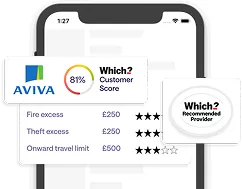
We've partnered with MoneySuperMarket to help you compare a wide range of car insurance options in one place, with added insight from Which?
Get a quote with MoneySuperMarket and we'll highlight Which? Best Buys and Recommended Providers in your results.
This is a Which? exclusive, so you won't find our scores or expert analysis on other comparison sites.
Expert reviews of 61 policies. We've analysed the small print so you don't have to.
Real claimant feedback based on 3,464 recent claims. We reveal who pays out quickly and treats customers fairly.
| Source | Index/survey | Premium | Premium is average of |
|---|---|---|---|
| Association of British Insurers | Premium Tracker (Q2 2026) | £566 | Premiums paid |
| Confused.com | Car Insurance Price Index (Q2 2026) | £719 | Cheapest prices quoted to customers |
| Compare the Market | Premium Drivers research (June 2026) | £592.96 | Cheapest quotes available to majority of customers |
| MoneySupermarket | Price index (May 2026) | £516.12 | Median price paid |
| GoCompare | Price index (Q2 2026) | £399 | Premiums paid |
| Quotezone | Car Insurance Price index (Q2 2026) | £619 | Median from random sample of 100,000 quotes |
Several organisations track car insurance pricing and regularly publish trends. Different calculation methods and publication dates can mean that the average figures don't always align.
While these figures outline what the 'average' person might pay (or be quoted), in real life there isn't an 'average' car insurance customer.
Insurance is personally priced. You might pay more than this because of a range of factors, such as being a young driver, having a more expensive car or a job title that's considered high risk, or driving convictions and past claims.
Your local area's crime and claims numbers also matter, as does whether you park your car on the street or in a garage.
But don't resign yourself to paying above the odds. Here are nine top tips that can help you get a cheaper premium.
Waiting to buy your car insurance until a few days before you want the policy to start is likely to increase prices.
Your current insurer should send a renewal notice around a month before your policy expires, and this is the ideal time to shop around for new cover.
Add a car insurance renewal reminder to your diary, and contact your insurer if you haven't received a renewal notice.
Even the time of day you run your quote can affect your premiums – we've found some insurers charge as much as double for customers who shop around in the early hours of the morning.
Use our customer scores to help you choose a great deal at MoneySuperMarket.
Compare dealsWhich? earns commission to fund its not-for-profit mission if you buy a product
Surely buying less insurance leads to lower prices?
Not in reality. Third-party-only cover – the legal minimum, covering only claims made against you by other people – and third-party, fire and theft cover, aren't always cheaper than comprehensive cover.
This is because insurers often view people buying third-party-only cover as much riskier than those buying comprehensive cover.
Run quotes for both types of cover. Even if comprehensive cover costs a little more, it could save you a huge amount of money if you have an accident.
Also, a word of warning: 'comprehensive' is one of the most misunderstood terms in insurance. We've found that the cover offered by comprehensive policies can contain huge gaps, as our car insurance reviews reveal.
To really make the most of comparison sites, you need to try several.
While you'll find a lot of big-name insurers across all the main sites, their panels of insurers vary and, in some cases, the prices do too.
The main price comparison sites for insurance are Compare the Market, Confused.com, GoCompare and MoneySuperMarket. Others include Mustard and Quotezone.
The first time you get quotes from several sites can feel like a slog, but when you renew, the sites will have your details saved, so you only need a quick review.
Don't forget that some insurers aren't on comparison sites (such as NFU Mutual), while others sell some of their policies only on their own websites, for example, Aviva, Co-op Insurance, Direct Line, Saga and Tesco.
Using multiple comparison sites won't affect your credit rating, as the 'soft searches' aren't visible to other companies. It's only if you apply for policies with monthly payments that a 'hard search' is conducted.
As the name suggests, cashback sites – such as Quidco and TopCashback – pay you a cash reward when you click through from them to buy goods or financial products.
These are worth checking out while you shop around for deals, but they won't necessarily offer you the best-value deals, even with cashback included.
A £600 insurance policy with £75 cashback is far from a bargain if you can get the same cover elsewhere for £400.
You can also get cashback if you go through cashback sites to reach comparison sites. Just make sure you go to the cashback site before getting your quote on the comparison site.
Once you've got a list of quotes, it's time to get tough and cut unnecessary extras.
You might be better off buying some of these yourself from other providers, for example in the case of breakdown cover and personal accident cover (consider life insurance instead).
Other add-ons you may be able to live without – such as enhanced courtesy car cover, legal expenses insurance and key cover.
Even if you're intent on keeping some extras, consider that some policies might include these as standard, as our reviews reveal. The more inclusive policy could work out cheaper once add-ons are factored in.
Here are the main types of add-ons:
If you're considered a high-risk driver, putting a lower-risk driver on the policy as a 'named' driver can bring the overall premium down.
For instance, drivers under 25, who face the steepest premiums, can benefit from having an older and more experienced driver on their policy.
If you're a high-risk driver, MoneySuperMarket says that, in some cases, adding someone who has more driving experience, no previous claims and is considered a much lower risk could save you hundreds of pounds on your premium.
Bear in mind, however, that it's illegal to put someone down as the main driver if this isn't the case. This practice is known as 'fronting' and is a type of insurance fraud that can lead to your policy being invalidated.
When you run a car insurance quote on a price comparison site, some of the policies you might see involve a 'black box' device being added to your car, or use an app on your phone (telematics policies), so the insurer can track your driving.
With telematics policies, if your day-to-day driving passes certain criteria laid out by the insurer (ranging from not driving at specific times of the day to measurements of your safety in cornering and braking), you'll be rewarded with discounts on your premium.
These policies can be particularly beneficial for very young drivers with no track record of safe driving.
According to MoneySuperMarket, based on the median annual price of comprehensive policies sold through its site in April 2026:
There's also a specific type of telematics policy that tracks how far you drive, rather than your overall driving habits. These so-called 'pay-per-mile' policies could save you money if you drive significantly less than the national average mileage (7,000 miles a year, according to the Department for Transport).
You may be able to estimate your mileage based on your MOT certificate or by checking the MOT history of a vehicle online.
If you need access to a car for only a short time, consider getting temporary car insurance or a policy with a rolling monthly contract that can be cancelled without incurring significant fees.
So you've found a quote much cheaper than the rest. But is there a catch?
When you click through to an insurer's site, you'll be asked to agree to a set of 'assumptions'. This is information about you that's assumed to be correct, that you haven't provided via the comparison site.
Check this carefully. If any of it is inaccurate, your quote could be incorrect.
Insurers will give you the option to pay for your cover in two ways: as a lump sum or in monthly instalments.
While paying monthly might seem like a sensible way of spreading the cost, you may actually be charged hundreds of pounds more over the year.
By paying in monthly instalments, you are, in effect, taking out a loan from your insurer. Most will charge you interest for it, and rates aren't cheap – in some cases more than 30% APR.
If paying monthly is your only real option, be sure to compare insurers' monthly, rather than annual, premiums when shopping around. Or you could consider paying using an 0% purchase credit card.
Before you buy cover, give your existing insurer a call and ask it to beat the other quotes you've found.
Surveys we've run over the years have shown that haggling does work and can save you hundreds of pounds – not bad for a few awkward minutes on the phone.
Try these tactics to maximise your chances of success:
Ghost brokers are scammers posing as car insurance brokers, and they can be found thriving on social media platforms. A Which? investigation in 2022 found 36 social media profiles – operating across three websites – that touted cheap insurance and appeared to be run by scammers.
Ghost brokers claim to be able to arrange cheap cover for hard-to-insure customers. However, to do this, they will secretly manipulate their customers’ details by, for instance, changing addresses and driving histories, and adding named drivers.
Victims will sometimes be provided with doctored documents to mask the amendments. The resulting policy looks fine to start with, but it will be worthless if the driver tries to claim.
If you’ve received suspicious correspondence from an insurer, let the insurer know as soon as possible using contact details you have verified independently. It’s also worth keeping a close eye on your credit report. This will allow you to pick up on any searches by companies you don’t recognise, which could indicate a fraudulent application made in your name.
If you think you’ve been the victim of any type of fraud, contact the police. Take photographs, make sketches and gather documentation or any other details that might be useful to an investigation.
Find the right policy for your vehicle using the service provided by MoneySuperMarket
Get a quote now